• Clinical
      |Clinical
    • Acute Coronary Syndromes
    • Cardiac Surgery
    • Covid-19
    • Heart Failure
    • Heart Health
    • Heart Rhythm
    • Hypertension
    • Interventional Cardiology
    • Mitral Valve
    • Pharmaceutics
    • Structural Heart Disease
    • TAVR
    • Tricuspid Valve
    • Vascular & Endovascular
  • Management
      |Management
    • Chest Pain Guidelines
    • Compensation
    • Economics
    • Education & Training
    • Legal News
    • Patient Care
    • Policy & Regulations
    • Professional Associations
    • Quality
    • Revenue
    • Staffing
  • Technology
      |Technology
    • AI
    • Cardiac Imaging
    • Cath Lab
    • CT
    • CVIS
    • ECG
    • Echo
    • EP Lab
    • Informatics
    • MRI
    • Nuclear Cardiology
    • Remote Monitoring
  • Videos
  • Conferences
      |Conferences
    • ACC
    • AHA
    • ASE
    • ASNC
    • ESC
    • EuroPCR
    • HFSA
    • HRS
    • HRS
    • SCAI
    • SCCT
    • SIIM
    • SNMMI
    • STS
    • TCT
    • VIVA
  • Custom Content
      |Custom Content
    • Experience Stories
    • Webinars & Videos
  • Subscribe
  • Forty Under 40 Award
      |Forty Under 40 Award
    • Class of 2026
    • Class of 2025

Search form

Home

News You Need to Know Today
Top 10 most popular cardiology video interviews this past month
Sunday, October 11, 2026
Link to Twitter Link to Facebook Link to Linkedin Link to Vimeo

Top Video Content

How Mass General is using AI to improve its cardiovascular imaging workflows

At Mass General Brigham, advanced algorithms help clinicians spend more time focused on what matters most.

READ MORE >
Brian Ghoshhajra, MD, MBA, FSCCT, Medical director of radiology and clinical operations for integrated imaging services, Mass General Bringham, and an associate professor of radiology at Harvard Medical School, explains how his center integrated artificial intelligence (AI) into its radiology and cardiovascular imaging workflow.
Share on Twitter Share on Facebook Share on Linkedin

How Mass General is using AI to improve its cardiovascular imaging workflows

Share on Twitter Share on Facebook Share on Linkedin
Brian Ghoshhajra, MD, MBA, FSCCT, Medical director of radiology and clinical operations for integrated imaging services, Mass General Bringham, and an associate professor of radiology at Harvard Medical School, explains how his center integrated artificial intelligence (AI) into its radiology and cardiovascular imaging workflow.
At Mass General Brigham, advanced algorithms help clinicians spend more time focused on what matters most.
READ MORE >

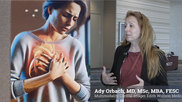
Hormonal changes a key detail when assessing cardiovascular risk in a female patient

Questions about menopause, oral contraceptive use and hormone replacement therapy should all be part of the conversation when evaluating a woman's cardiovascular health.

READ MORE >
Ady Orbach, MD, MSc, MBA, FESC, a cardiologist and multimodality cardiac imager at the Edith Wolfson Medical Center, Holon, Israel, explains the impact of women's hormones on the cardiovascular system and why cardiac imagers should pay attention. The women having chest pain art is by Patrcia Carrascosa, displayed at RSNA 2025.
Share on Twitter Share on Facebook Share on Linkedin

Hormonal changes a key detail when assessing cardiovascular risk in a female patient

Share on Twitter Share on Facebook Share on Linkedin
Ady Orbach, MD, MSc, MBA, FESC, a cardiologist and multimodality cardiac imager at the Edith Wolfson Medical Center, Holon, Israel, explains the impact of women's hormones on the cardiovascular system and why cardiac imagers should pay attention. The women having chest pain art is by Patrcia Carrascosa, displayed at RSNA 2025.
Questions about menopause, oral contraceptive use and hormone replacement therapy should all be part of the conversation when evaluating a woman's cardiovascular health.
READ MORE >

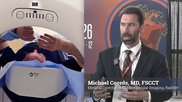
Hub-and-spoke model expands access to CCTA as the modality continues to gain momentum

“It’s not just about scanning,” one specialist explained. “You need to have everything come together.”

READ MORE >
Michael Coords, MD, FSCCT, Medical Director of Cardiovascular Imaging, RadNet, a leader with the SCCT Health Policy and Practice Committee Regulatory Task Force, and incoming co-chair of the Health Policy and Practice Committee, explains the use of the hub and spoke model to expand CCTA in emergency departments and outpatient imaging centers.
Share on Twitter Share on Facebook Share on Linkedin

Hub-and-spoke model expands access to CCTA as the modality continues to gain momentum

Share on Twitter Share on Facebook Share on Linkedin
Michael Coords, MD, FSCCT, Medical Director of Cardiovascular Imaging, RadNet, a leader with the SCCT Health Policy and Practice Committee Regulatory Task Force, and incoming co-chair of the Health Policy and Practice Committee, explains the use of the hub and spoke model to expand CCTA in emergency departments and outpatient imaging centers.
“It’s not just about scanning,” one specialist explained. “You need to have everything come together.”
READ MORE >

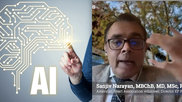
Will AI replace cardiologists?

AI-based tools are here to stay, but one expert does not see them replacing cardiologists anytime soon. Look at recent trends in radiology, he says, to get a better idea of what cardiology's future may look like.

READ MORE >
Sanjiv Narayan, MD, MBChB, MSc, FRCP, an American Heart Association volunteer, director of the electrophysiology research and atrial fibrillation program, and co-founder of the Stanford Arrhythmia Center at Stanford Medicine, sees AI at a major inflection point in cardiology, enabling cardiologists to become more efficient, gain more detailed insights into their patients' risk factors, better answers to clinical questions and help in navigating procedures. But, he said AI will not replace cardiologists.
Share on Twitter Share on Facebook Share on Linkedin

Will AI replace cardiologists?

Share on Twitter Share on Facebook Share on Linkedin
Sanjiv Narayan, MD, MBChB, MSc, FRCP, an American Heart Association volunteer, director of the electrophysiology research and atrial fibrillation program, and co-founder of the Stanford Arrhythmia Center at Stanford Medicine, sees AI at a major inflection point in cardiology, enabling cardiologists to become more efficient, gain more detailed insights into their patients' risk factors, better answers to clinical questions and help in navigating procedures. But, he said AI will not replace cardiologists.
AI-based tools are here to stay, but one expert does not see them replacing cardiologists anytime soon. Look at recent trends in radiology, he says, to get a better idea of what cardiology's future may look like.
READ MORE >

5 practice-changing trials from ESC Congress 2026

Damodhar Suresh, MD, spoke to Cardiovascular Business about some of the biggest studies presented during the annual ESC conference in Munich, Germany. 

READ MORE >
Damodhar Suresh, MD, a cardiologist and the executive medical director of St. Elizabeth Healthcare Heart and Vascular Institute in Edgewood, Kentucky, and current science chair for the International committee for the American Heart Association (AHA), explains some of the top trials and key takeaways at the 2026 European Society of Cardiology (ESC) meeting. #ESC2026
Share on Twitter Share on Facebook Share on Linkedin

5 practice-changing trials from ESC Congress 2026

Share on Twitter Share on Facebook Share on Linkedin
Damodhar Suresh, MD, a cardiologist and the executive medical director of St. Elizabeth Healthcare Heart and Vascular Institute in Edgewood, Kentucky, and current science chair for the International committee for the American Heart Association (AHA), explains some of the top trials and key takeaways at the 2026 European Society of Cardiology (ESC) meeting. #ESC2026
Damodhar Suresh, MD, spoke to Cardiovascular Business about some of the biggest studies presented during the annual ESC conference in Munich, Germany. 
READ MORE >

Key things to consider when building the team for your cardiac CT program

Getting nurses and technologists more involved is a smart way to ensure new cardiac CT programs deliver the safest, most effective patient care possible.

READ MORE >
Video: Brennen Johnston, BASRT(R)(CT) ARRT. Radiology Director of Enterprise Advanced Cardiac Imaging for Advocate Health in Charlotte, N.C., explains the role of a CCTA technologist champion when implementing or expanding new cardiac CT programs. #SCCT #YesCCT
Share on Twitter Share on Facebook Share on Linkedin

Key things to consider when building the team for your cardiac CT program

Share on Twitter Share on Facebook Share on Linkedin
Video: Brennen Johnston, BASRT(R)(CT) ARRT. Radiology Director of Enterprise Advanced Cardiac Imaging for Advocate Health in Charlotte, N.C., explains the role of a CCTA technologist champion when implementing or expanding new cardiac CT programs. #SCCT #YesCCT
Getting nurses and technologists more involved is a smart way to ensure new cardiac CT programs deliver the safest, most effective patient care possible.
READ MORE >

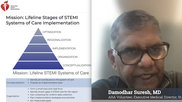
American Heart Association helping countries all over the world improve care

The AHA has developed systems of care that can help developing countries improve their treatment strategies for both heart attack and stroke.

READ MORE >
Damodhar Suresh, MD, executive medical director of St. Elizabeth Healthcare Heart and Vascular Institute in Edgewood, Kentucky. He is also a volunteer current science chair for the International committee for the American Heart Association (AHA), explains how the AHA is helping cardiologists from numerous countries put in place systems of care to standardize how heart attack patients are treated.
Share on Twitter Share on Facebook Share on Linkedin

American Heart Association helping countries all over the world improve care

Share on Twitter Share on Facebook Share on Linkedin
Damodhar Suresh, MD, executive medical director of St. Elizabeth Healthcare Heart and Vascular Institute in Edgewood, Kentucky. He is also a volunteer current science chair for the International committee for the American Heart Association (AHA), explains how the AHA is helping cardiologists from numerous countries put in place systems of care to standardize how heart attack patients are treated.
The AHA has developed systems of care that can help developing countries improve their treatment strategies for both heart attack and stroke.
READ MORE >

How to integrate AI into cardiac imaging workflows

Implementing advanced AI models into daily practice takes much more than simply installing software. It requires a clinical champion and multiple stakeholders to coordinate the effort.

READ MORE >
Ron Blankstein, FACC, FASNC, FSCCT, FASPC, director of cardiac computed tomography, Brigham and Women's Hospital, and professor of medicine, radiology, at Harvard Medical School, explains how cardiac imaging departments need to plan for the involved process of integrating artificial intelligence (AI) algorithms into clinical practice. #SCCT #YesCCT
Share on Twitter Share on Facebook Share on Linkedin

How to integrate AI into cardiac imaging workflows

Share on Twitter Share on Facebook Share on Linkedin
Ron Blankstein, FACC, FASNC, FSCCT, FASPC, director of cardiac computed tomography, Brigham and Women's Hospital, and professor of medicine, radiology, at Harvard Medical School, explains how cardiac imaging departments need to plan for the involved process of integrating artificial intelligence (AI) algorithms into clinical practice. #SCCT #YesCCT
Implementing advanced AI models into daily practice takes much more than simply installing software. It requires a clinical champion and multiple stakeholders to coordinate the effort.
READ MORE >

3D printing, VR playing a major role in congenital heart imaging

3D models can improve the visualization of challenging cardiac anatomy in addition to supporting clinical decision-making, education and procedural planning.

READ MORE >
Kanwal Farooqi, MD, pediatric cardiology imaging specialist, and associate professor of pediatrics at Columbia University Irving Medical Center, innovations for clinical 3D printing and virtual reality in cardiac CT imaging aimed at structural and congenital heart patients.
Share on Twitter Share on Facebook Share on Linkedin

3D printing, VR playing a major role in congenital heart imaging

Share on Twitter Share on Facebook Share on Linkedin
Kanwal Farooqi, MD, pediatric cardiology imaging specialist, and associate professor of pediatrics at Columbia University Irving Medical Center, innovations for clinical 3D printing and virtual reality in cardiac CT imaging aimed at structural and congenital heart patients.
3D models can improve the visualization of challenging cardiac anatomy in addition to supporting clinical decision-making, education and procedural planning.
READ MORE >

Digital twin technology shows ability to personalize ablation planning

Digital twins may be used in the near future to help clinicians plan ahead before EP ablation procedures. They could preview how the patient's heart will react to treatment, for example, increasing the odds of a positive outcome.

READ MORE >
Natalia Trayanova, PhD, FNAI, FHRS, FAHA, FACC, FESC, FEHRA, FIAMBE, FBMES, FAIMBE, FIUPS, FIEEE, Professor of Biomedical Engineering, Director of the Alliance for Cardiovascular Diagnostic and Treatment innovation (ADVANCE), and director of AI research in health and medicine, at the Data Science and AI Institute at Johns Hopkins University, explains how her team has developed a digital twin to copy the electrical function of a specific patient's heart to test various ablation strategies.
Share on Twitter Share on Facebook Share on Linkedin

Digital twin technology shows ability to personalize ablation planning

Share on Twitter Share on Facebook Share on Linkedin
Natalia Trayanova, PhD, FNAI, FHRS, FAHA, FACC, FESC, FEHRA, FIAMBE, FBMES, FAIMBE, FIUPS, FIEEE, Professor of Biomedical Engineering, Director of the Alliance for Cardiovascular Diagnostic and Treatment innovation (ADVANCE), and director of AI research in health and medicine, at the Data Science and AI Institute at Johns Hopkins University, explains how her team has developed a digital twin to copy the electrical function of a specific patient's heart to test various ablation strategies.
Digital twins may be used in the near future to help clinicians plan ahead before EP ablation procedures. They could preview how the patient's heart will react to treatment, for example, increasing the odds of a positive outcome.
READ MORE >

Innovate Healthcare thanks our partners for supporting our newsletters.
Sponsorship has no influence on editorial content.

Interested in reaching our audiences, contact our team

*|LIST:ADDRESSLINE|*

You received this email because you signed up for newsletters from Innovate Healthcare.
Change your preferences or unsubscribe here

Contact Us  |  Unsubscribe from all  |  Privacy Policy

© Innovate Healthcare, a TriMed Media brand
Innovate Healthcare

Pagination

    • Current page 1
    • Page 2
    • Page 3
    • Page 4
    • Page 5
    • Page 6
    • Page 7
    • Page 8
    • Page 9 …
    • Next page Next ›
    • Last page Last »
  • Home
  • News
  • Article Archive
  • Custom Content
  • Webinars
  • Press Releases
  • Content Studio
  • Advertising
  • Submit Press Release
  • Contact Us
  • Terms of Use
  • Privacy Policy
  • Cardiovascular Business
  • HealthExec
  • Radiology Business
 
© 2026 Innovate Healthcare | All Rights Reserved. | Terms of Use | Privacy Policy
 
Design by Adaptive Theme
Trimed Popup